Low porosity hair has cuticle scales that remain flat and overlap tightly, so water and products remain on the surface instead of being absorbed. It is a structural feature, not a sign of damage, and it does not change by itself. The practical consequences of having this hair type are slower absorption, slower drying and easier buildup, which is precisely what makes low porosity hair respond more to how you apply products than to how much you apply. The fix is technique: apply products to soaking-wet hair and add gentle warmth so ingredients spread and absorb instead of sitting on top.
What Is Low Porosity Hair?
Low porosity hair has cuticle scales that overlap and are tightly packed together, making it hard for water and products to get into the hair shaft.
Think of it like roof shingles pressed tightly together: rain just runs off instead of soaking in. This is why low porosity hair can seem “resistant” to conditioners and treatments. Hair porosity is about how well your strands take in and keep moisture.
Your genes largely set your natural porosity, and a normal washing routine will not transform it. Bleach, colour and heat damage, along with years of everyday wear, can raise porosity over time, especially toward the ends. What can change is how your hair behaves: repeated washes in hard water can leave mineral deposits on the hair surface.
A small study published in the Indian Journal of Dermatology, Venereology and Leprology washed hair samples from 20 volunteers in either hard tap water or bottled water for three weeks. Under an electron microscope, the hard water samples carried significantly more magnesium on the surface, but there was no significant difference in cuticle damage. The study did not test how products absorb, but many people find that mineral buildup makes hair feel coated and slow to take in product, which is easy to mistake for low porosity. If you live in a hard water area, try a clarifying wash before deciding your hair is low porosity.
Signs That You Have Low Porosity Hair
Three or four of these signs together are a reliable signal that you have low porosity hair. Here’s what you might notice every day:
- Water beads on the surface instead of soaking in right away.
- Conditioners and oils feel like they’re “sitting” on the hair.
- Hair takes a long time to dry, even with a diffuser.
- Treatments and dyes don’t seem to work as well as they should and can give streaky results.

Quick At-Home Porosity Test
You can quickly check if you have low porosity hair at home with a simple test.
- Wash your hair with a gentle shampoo to remove any products from the surface.
- Next, take a clean, dry strand of your hair and place it in a glass of room-temperature water filled to the top.
- Watch what happens for about 2 to 4 minutes.
- If the strand stays near the surface, your hair is likely low porosity.
- If the strand sinks slowly to the middle, your hair probably has normal porosity.
- If the strand quickly sinks to the bottom, your hair has high porosity.
Think of this test as a rough indicator, not a diagnostic tool. Surface tension can keep a dry strand floating for a while whatever its porosity, and any leftover oil or product makes that effect stronger. If the result contradicts your day-to-day experience, such as how long your hair takes to dry or whether product still sits on it after you rinse out conditioner, trust the behaviour. Daily observation is usually more accurate than the glass test.
Low vs High Porosity Hair: What’s the Difference?
The main distinction between low vs high porosity hair is the cuticle:
| Trait | Low Porosity Hair | High Porosity Hair |
|---|---|---|
| Cuticle structure | Flat, tightly overlapping scales | Raised or damaged, gapped scales |
| Moisture absorption | Slow. Products sit on top | Fast. Soaks up water and product quickly |
| Moisture retention | Strong once absorbed | Weak. Dries out again quickly |
| Drying time | Slow to dry | Dries quickly |
| Best product texture | Lightweight, water-based formulas | Richer creams, oils and butters |
| Common concern | Product buildup | Dryness and frizz |
Is Low Porosity Hair Good or Bad?
Low porosity hair is neither good nor bad. It holds onto moisture well once it’s hydrated, but you need the right method to get moisture in. It is also less prone to breakage than high porosity hair. Colour can take longer to process on low porosity hair, so let your colourist know. The main challenge is working with the cuticle, which actually helps protect the hair.
Low Porosity Hair Care
Setting up a good routine for low porosity hair is simple. Use a gentle cleanser, add moisture with steam or heat, and choose very light products that can get into the hair shaft.
Use Lightweight, Moisture-Rich Products
Apply everything to soaking-wet hair. Once hair is towel-dried there is less water to carry product along the strand, so more of it sits on top.
Conditioner for low porosity hair should be lightweight and water-based. Look for formulas that melt into the strand instead of coating it.
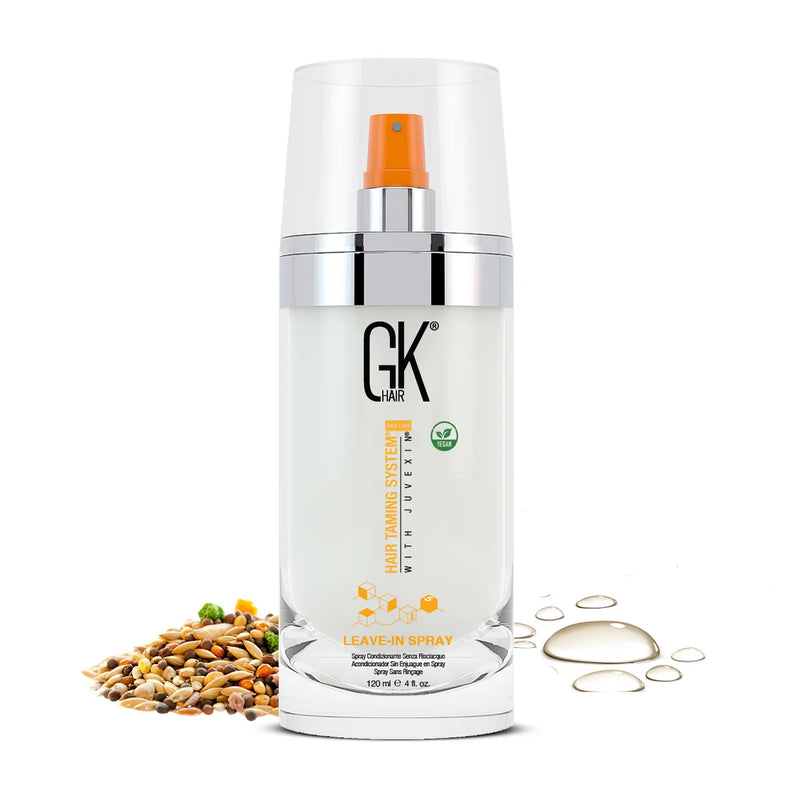
Leave in conditioner for low porosity hair: GK Hair Leave-In Conditioner Hair Spray. Best for low porosity hair that needs hydration without weight or buildup.
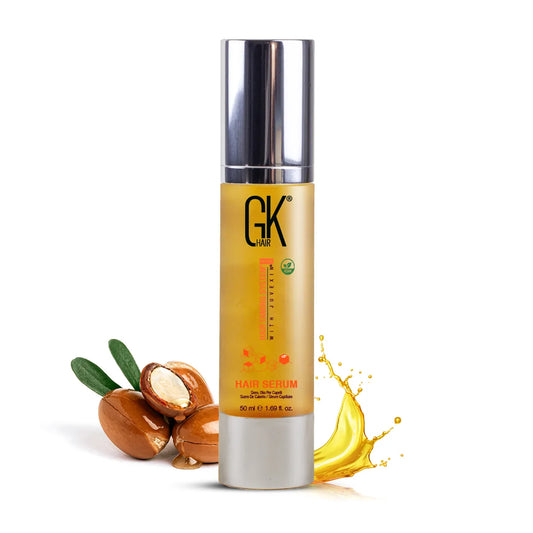
Low porosity hair oil: Use one or two drops of GK Hair Argan Oil Serum. Best for all hair types seeking lightweight frizz control, shine and flyaway smoothing without added weight.
Apply Heat for Better Absorption
Warmth helps products absorb faster. Heat speeds up how quickly water and dissolved ingredients move into the fibre, and conditioning ingredients bind to warm hair more readily than to cool hair.
The hair cuticle is not a valve that flips open with heat and snaps shut with cold. Warmth just speeds up how fast products soak in. So keep things warm and unhurried: apply your product to wet hair, cover it, and let it sit for 15 to 20 minutes.
Choosing the Right Styling Products
With low porosity hair, the order of your products matters more than the quantity. Start on soaking-wet hair with the Leave-In Conditioner Hair Spray, comb it through from roots to ends and let it sit for a few minutes.
Then work one or two drops of Argan Oil Serum through the mid-lengths and ends only. Oil goes last, because oil applied first would stop the water-based layers from absorbing. Avoid heavy butters and waxy products at every stage, because they sit on the surface of the hair and build up over a few washes.
How to Moisturize Low Porosity Hair
To moisturize low porosity hair, apply light, water-based products to soaking-wet hair, cover with a cap and gentle heat for 15 to 20 minutes, then seal with one or two drops of light oil. Heavy butters and thick creams tend to sit on the cuticle rather than absorb.
Oils for Low Porosity Hair
Thick, heavy oils like castor tend to sit on top of low porosity hair and can build up. Weight and penetration are different things: in a Journal of Cosmetic Science study of coconut, sunflower and mineral oil, only coconut oil reduced protein loss from hair, which the authors put down to its ability to penetrate the hair shaft. Even so, many people with low porosity hair find coconut oil feels heavy. Lighter oils such as argan and grapeseed are an easier choice: a drop or two leaves a thin, shiny film with less residue.

Is Coconut Oil Good for Low Porosity Hair?
Fractionated coconut oil can work for low porosity hair if you use just a few drops, but it is not the oil from that study: fractionation usually removes lauric acid, the fatty acid the authors credit for coconut oil’s ability to penetrate hair. If your hair feels coated or your scalp gets itchy, stop using coconut oil and try argan or grapeseed oil instead.
Shampoo for Low Porosity Hair: When to Clarify
If you have low porosity hair, it’s important to use a clarifying shampoo regularly because your hair can easily get covered with products and oils. Buildup blocks moisture and makes your hair feel less smooth.
Aim for every two to four weeks, or after using a lot of products. If you use serums, dry shampoo and heat protectant often, every two weeks is best. If you wash your hair often and use light products, once a month is enough.
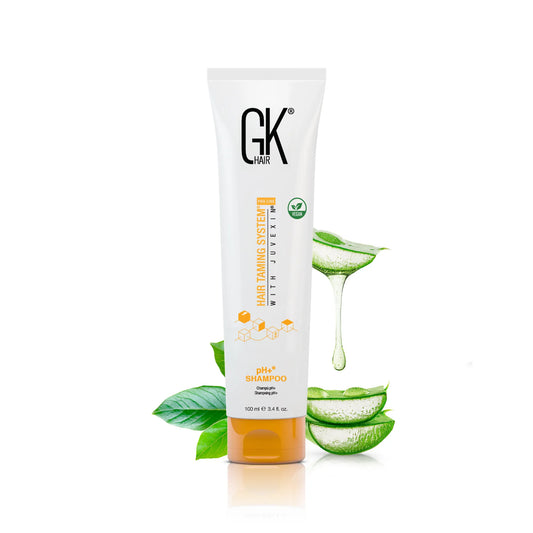
Our pH+ Shampoo is a sulphate-free clarifying shampoo that removes product buildup and impurities. Best for hair that needs a thorough deep cleanse. Lather it into wet hair, leave it on for 1 to 3 minutes, then rinse.

Your Everyday Shampoo for Low Porosity Hair
Between clarifying washes, low porosity hair needs a cleanser that hydrates without leaving a film. Our Moisturizing Shampoo is sulphate-free and contains Juvexin, so it removes daily oils without a heavy conditioning agent that would coat the tightly packed cuticle. Best for normal to dry hair, including low porosity hair, that calls for a gentle, non-stripping cleanser 2 to 3 times a week.
After shampooing, use Moisturizing Conditioner, best for low porosity hair requiring slip and softness without buildup. Apply it to soaking-wet hair, comb through and leave it for about 3 minutes before rinsing thoroughly.

Stylist’s Corner: With low porosity hair, our stylists apply product to very wet hair, then cover it with gentle heat for 15 to 20 minutes so the formula absorbs instead of sitting on top.
Low Porosity Hair Treatments
A low porosity hair treatment works best if it involves heat and time. Every two weeks, apply Deep Conditioner to freshly washed, soaking-wet hair, cover with a plastic cap and a warm towel for 20 minutes, then rinse thoroughly with lukewarm water.
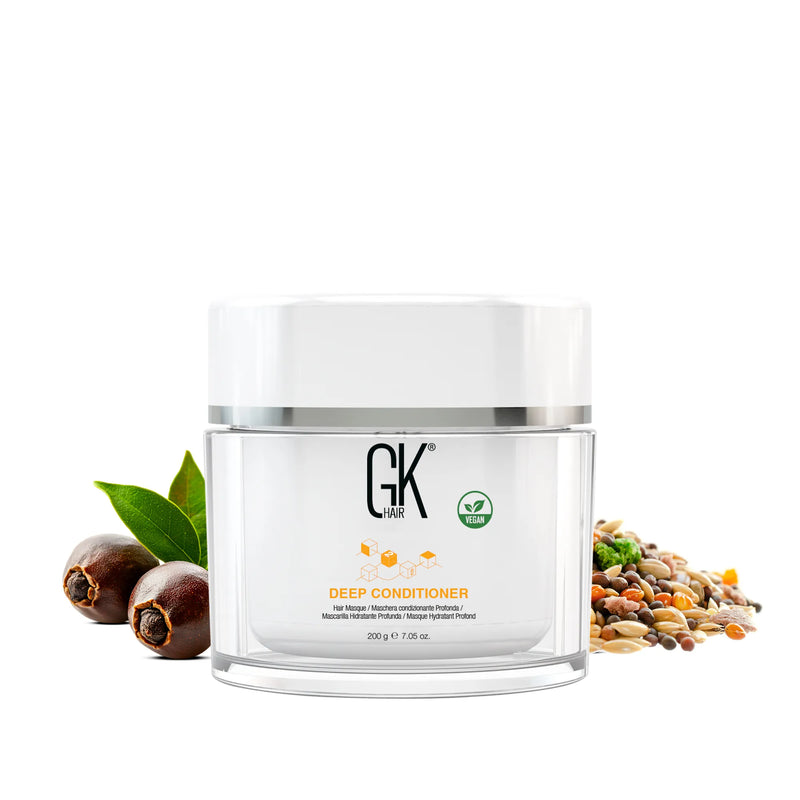
Our formulas include Juvexin V2, a non-hydrolysed, plant-based protein blend derived from quinoa and pea. It works in two sizes at once: the smaller molecules move into the cortex to strengthen the fibre from within, while the larger molecules wrap the cuticle as a protective layer.
Does Low Porosity Hair Need Protein?
It can use some, in moderation. Many guides warn low porosity hair off protein because the cuticle is already tightly packed, and too much protein can leave this hair type stiff and prone to snapping. Size matters too: lab studies show small protein fragments can travel into the hair, while large protein molecules stay on the surface as a film. Juvexin V2 is built around that split. If your hair feels rigid or straw-like after a treatment, space protein treatments further apart and lead with moisture.
Low Porosity Curly Hair: What to Know
Curly low porosity hair is especially prone to product buildup because curls trap products easily. To avoid this, use thin layers and try the LCO method (liquid, cream, oil) on very wet hair: start with a water-based leave-in, add a light cream and finish with a drop of serum. For shaping and definition, see our guide on how to style curly hair.

Low Porosity Hair Routine: A Sample Weekly Schedule
Want a simple routine you can follow? Here’s a basic weekly guide you can adjust depending on how often you wash your hair.
- Wash 2 to 3 times a week with Moisturizing Shampoo and Moisturizing Conditioner.
- Every two weeks, follow your wash with the Deep Conditioner under a cap and gentle warmth.
- Apply a light leave-in to wet hair each day you wash.
- On days you don’t wash, refresh your ends with a spritz of water and a dab of serum.
- If you have hard water or swim in chlorinated pools often, clarify closer to every two weeks.
Mistakes to Avoid with Low Porosity Hair
These habits can make low porosity hair worse, no matter how good the products you’re using are.
- Using heavy butters and thick waxes that don’t get absorbed and only coat your hair.
- Waiting until your hair is towel-dried before applying your leave-in conditioner and styling cream.
- Getting into a habit of skipping clarifying shampoo, so buildup gets worse.
- Washing and conditioning with very cold water, which slows how fast products spread and absorb. Lukewarm water is the easier choice.
- Overloading the hair with lots of products at once. Go for light, focused layers.
Troubleshooting: If Your Low Porosity Hair Feels Wrong
Use this quick guide when your strands feel off.
- If your hair feels gooey or sticky: buildup is probably the cause. Wash with a clarifying shampoo for low porosity hair, then follow with a lightweight deep conditioning treatment.
- If your hair feels dry or brittle like straw: you might be clarifying too often or using too much protein. Cut back to once a month and use more moisture-rich products.
- If your curls look dull and flat: you’re probably using products that are too heavy for low porosity strands. Switch to a light, water-based leave-in and a light serum on soaking-wet hair.
From Overwhelmed to Confident with Low Porosity Hair
Low porosity hair is not damaged hair. It just needs a different method: lightweight, water-based products on soaking-wet hair, gentle warmth when you deep condition, and a clarifying wash every two to four weeks. Explore our Moisture & Hydration range to build that routine.
FAQs About Low Porosity Hair
Does low porosity hair dry fast?
No. Low porosity hair often takes longer to dry, especially if you air dry. Most of the water left after washing sits on and between the strands rather than inside them, so use gentle heat and a diffuser to speed things up.
Can hair porosity change over time?
Yes. Bleach, colour, heat styling and everyday wear can lift and chip the cuticle over time, making hair more porous, and ends are usually more porous than roots. Buildup does not change porosity, but it can make hair behave as if it were lower porosity until you clarify.
Is low porosity hair frizzy?
Sometimes, but not for the usual reason. Low porosity hair takes up less moisture from humid air than high porosity hair, so it swells and frizzes less in humidity. Most frizz on low porosity hair is product-related: when layers of product sit above the cuticle, they roughen the surface and stop hair lying flat. A clarifying wash gets to the bottom of it faster than adding another product.
How often should you wash low porosity hair?
Most people do well washing their hair two or three times a week and using a clarifying shampoo every two to four weeks. If you use a lot of styling products or have hard water, you might need to clarify more often. If your hair feels dirty or your scalp is itchy, use a clarifying shampoo to refresh it.
What ingredients should you look for in low porosity hair products?
Look for water-based humectants like glycerine and aloe, light oils such as argan and grapeseed, and protein in moderation rather than heavy protein treatments at every wash. Avoid heavy butters and waxes, as they cause buildup. Our formulas use Juvexin V2, a non-hydrolysed plant protein from quinoa and pea whose smaller molecules reach the cortex while larger ones wrap the cuticle.
How can I tell if my hair products are causing buildup?
If your hair feels coated, your scalp is itchy, or products stop working, you probably have buildup. Because low porosity hair doesn’t absorb well, residue collects on the surface faster. A clarifying wash every two to four weeks clears it, and a light, water-based routine stops it coming back.